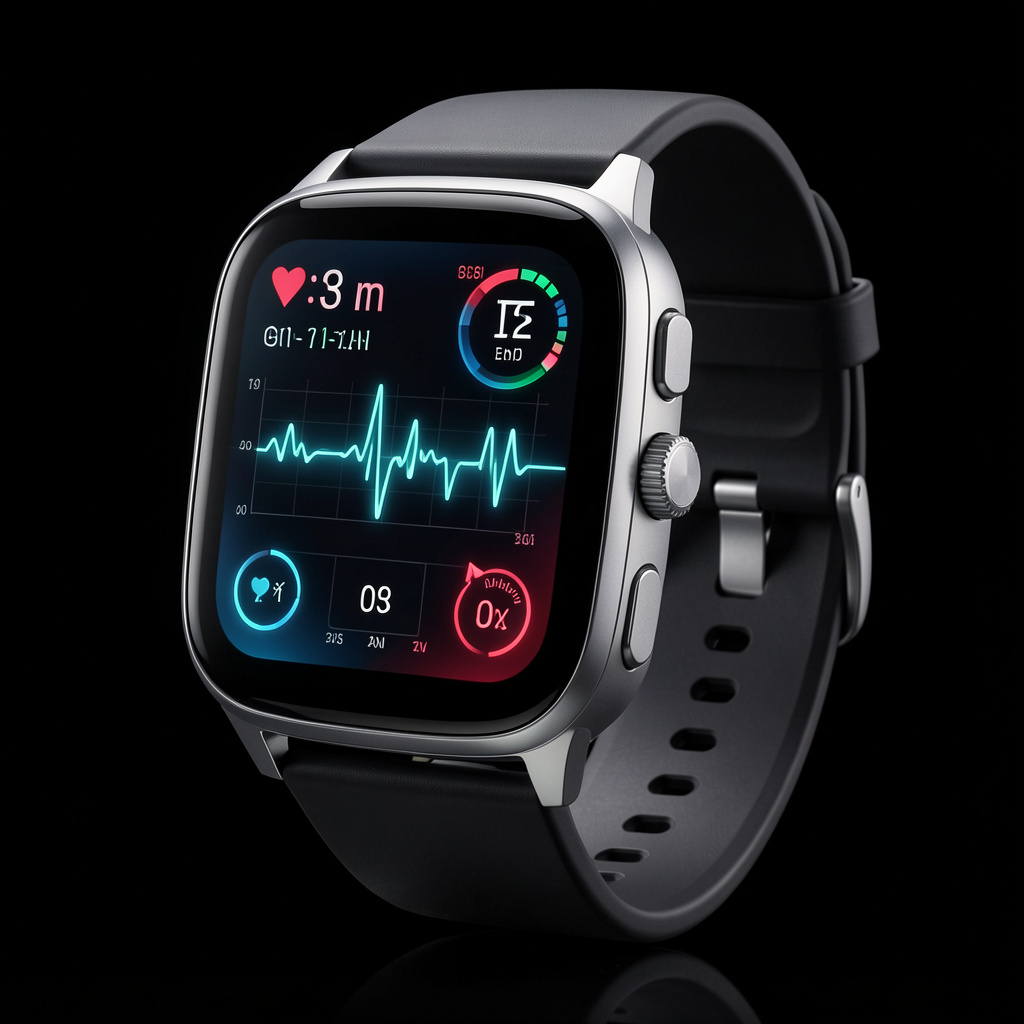
Meta is reportedly preparing to enter the highly competitive smartwatch market in 2026, marking a major expansion of its consumer hardware ambitions. According to multiple reports, the company is working on its first smartwatch featuring Meta AI integration, advanced health-tracking capabilities, and deep compatibility with its Ray-Ban Meta smart glasses ecosystem.
If launched, this device would represent Meta’s most serious push into wearables beyond mixed-reality headsets and smart glasses, placing it in direct competition with established players such as Apple, Samsung, Google, Garmin, and Fitbit.
Meta’s Growing Focus on Wearables and AI
Over the past few years, Meta has steadily evolved from a social-media-centric company into a broader technology powerhouse. Its heavy investments in artificial intelligence (AI), virtual reality (VR), augmented reality (AR), and consumer hardware reflect a long-term vision where computing extends beyond smartphones and traditional screens.
Products such as Meta Quest headsets and Ray-Ban Meta smart glasses represent early steps in this transformation. A smartwatch could serve as the missing link—bringing AI intelligence, health data, and gesture-based controls together into a single, always-on wearable.
Project “Malibu 2”: Meta’s Smartwatch Initiative
Reports suggest Meta’s smartwatch project is internally code-named “Malibu 2.” Unlike conventional smartwatches that focus primarily on notifications and fitness tracking, Meta’s device is expected to play a more active role within the company’s broader wearable ecosystem.
Rather than acting as a standalone gadget, the smartwatch could function as a central hub connecting AI services, smart glasses, and future AR devices.
A Potential Replacement for the Neural Wristband
Meta has been experimenting with a neural wristband designed to enable gesture-based control of AR devices. While innovative, such experimental hardware may not be ideal for mass adoption.
The upcoming smartwatch could replace this wristband, offering similar gesture-control capabilities in a more familiar and consumer-friendly form factor. This would allow users to control smart glasses, apps, and AI interactions through subtle hand movements—without touching a screen.
Meta AI: The Core of the Smartwatch Experience
One of the most significant highlights of Meta’s rumored smartwatch is the integration of Meta AI. Unlike traditional voice assistants, Meta AI is expected to operate as a proactive digital companion rather than a reactive tool.
Expected Meta AI Capabilities
- Voice-based commands and queries
- Intelligent health and fitness insights
- Smart reminders and daily planning
- Context-aware assistance via smart glasses
- AI-driven activity and wellness suggestions
Meta is reportedly working on new AI models, intelligent agents, and deeper system-level integrations. On a smartwatch, this could translate into real-time insights instead of passive data collection.
Health Tracking: More Than Just Fitness
Health and wellness are likely to be major pillars of Meta’s smartwatch strategy.
Expected Health Features
- Heart-rate monitoring
- Sleep tracking and analysis
- Step counting and activity detection
- Stress and recovery insights
- AI-powered fitness recommendations
Unlike traditional fitness trackers, Meta could use AI to deliver personalized, actionable insights, helping users understand not just what their data shows, but what actions to take next.
Deep Integration With Ray-Ban Meta Smart Glasses
Meta’s Ray-Ban smart glasses have already demonstrated strong and rapidly growing market demand. According to EssilorLuxottica’s Q4 2025 earnings report, shipments of Ray-Ban Meta smart glasses crossed over 7 million units in 2025 alone, a dramatic increase compared to the roughly 2 million units combined during 2023–2024.
This surge in demand reportedly led Meta to temporarily slow wider global expansion due to supply constraints, not lack of consumer interest. The strong performance of the smart glasses significantly strengthens the case for a companion smartwatch.
A Meta smartwatch could serve as a control and intelligence hub for the glasses by:
- Managing notifications discreetly
- Enabling gesture-based interactions
- Powering AI-assisted visual and audio experiences
Together, the smartwatch and smart glasses could form a tightly integrated ecosystem—similar to how the Apple Watch complements the iPhone, but with a stronger emphasis on AR and AI-first computing.
Reviving a Shelved Smartwatch Project
Meta’s interest in smartwatches is not new. The company previously worked on a smartwatch prototype that reportedly included cameras and advanced sensors. However, the project was shelved in 2022 due to:
- Technical challenges
- Rising development costs
- Budget cuts within Meta’s Reality Labs division
The renewed effort suggests that advancements in AI, sensor technology, and manufacturing efficiency have made the idea more viable heading into 2026.
Meta’s Broader AR and Mixed-Reality Strategy
The smartwatch fits into Meta’s wider AR and MR roadmap. Reports indicate that Meta is reviewing its product-launch timelines to avoid overcrowding the market and to maintain product quality.
- Several AR and MR devices remain in development
- A mixed-reality glasses project, internally known as Phoenix, has reportedly been delayed until 2027
This staggered release strategy allows each product—smartwatch, smart glasses, and headsets—to play a distinct and well-defined role within Meta’s ecosystem.
Entering a Crowded Smartwatch Market
If Meta launches its smartwatch, it will enter a market dominated by established brands.
Meta’s Potential Advantages
- Strong AI and machine-learning expertise
- Unique AR and smart-glasses integration
- Experience building large-scale digital ecosystems
Key Challenges
- Health-data accuracy and reliability
- Battery life and hardware efficiency
- User trust and privacy concerns
- Competing with mature app ecosystems
Success will depend on how well Meta balances innovation with reliability and user trust.
Will Meta Actually Launch the Smartwatch in 2026?
Meta has not officially confirmed the smartwatch. However, multiple credible reports, combined with the company’s sustained investment in AI and wearables, suggest that a 2026 launch remains plausible.
If released, the device would represent:
- Meta’s first mainstream consumer smartwatch
- A strategic step toward AI-first wearable computing
- A foundation for future AR-centric devices
What This Means for the Future of Wearables
Meta’s smartwatch ambitions highlight a broader industry trend: wearables are evolving beyond simple fitness trackers into intelligent personal assistants.
Industry Implications
- AI-powered wearables will become more common
- Smartwatches will act as contextual, always-on assistants
- AR, AI, and gesture-based computing will increasingly converge
Meta’s vision points toward a future where users interact with technology naturally—through voice, gestures, and contextual intelligence, rather than screens alone.
Final Verdict
Meta’s rumored smartwatch could significantly reshape the wearable landscape if executed well. By combining Meta AI, advanced health tracking, and seamless integration with Ray-Ban Meta smart glasses, the company has a real opportunity to differentiate itself in a crowded market.
While official confirmation is still pending, all indicators suggest that Meta is seriously committed to building an AI-driven wearable ecosystem. If the smartwatch launches in 2026, it may mark the beginning of a new phase in how consumers interact with everyday technology.