The iPhone 17 Pro Max vs Samsung Galaxy S25 Ultra comparison highlights one of the most exciting flagship smartphone battles in recent years. Apple and Samsung continue to push the limits of smartphone technology, delivering devices that represent the very best of their innovation. While both phones aim to dominate the premium market, they take noticeably different approaches to performance, design, and user experience.
Let’s take a closer look at how the iPhone 17 Pro Max and Samsung Galaxy S25 Ultra compare in real-world usage.
Design and Build Quality
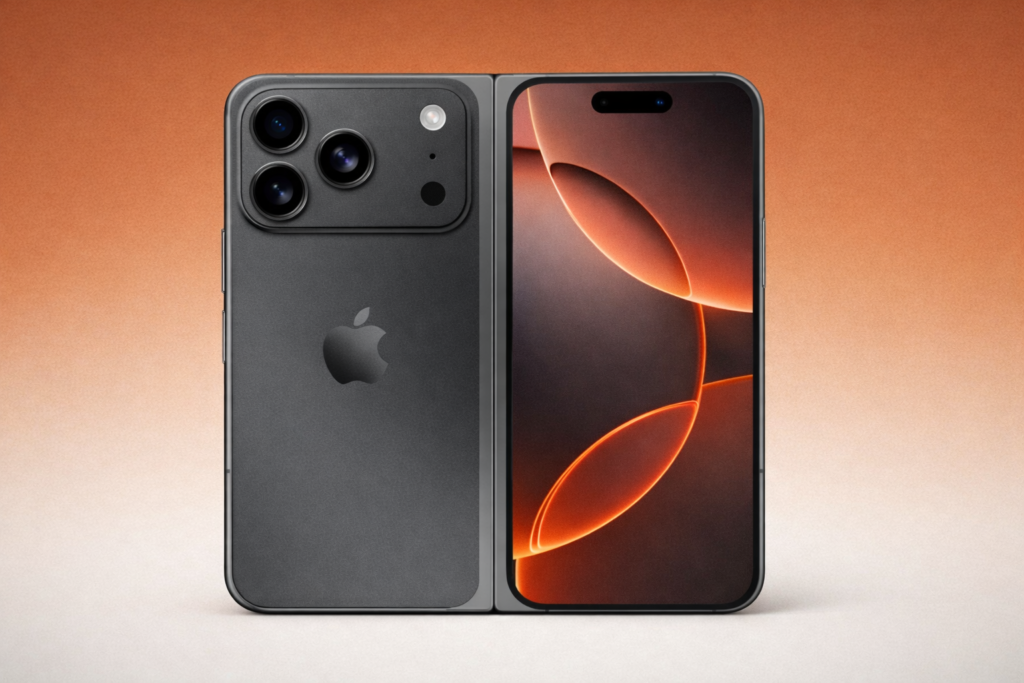
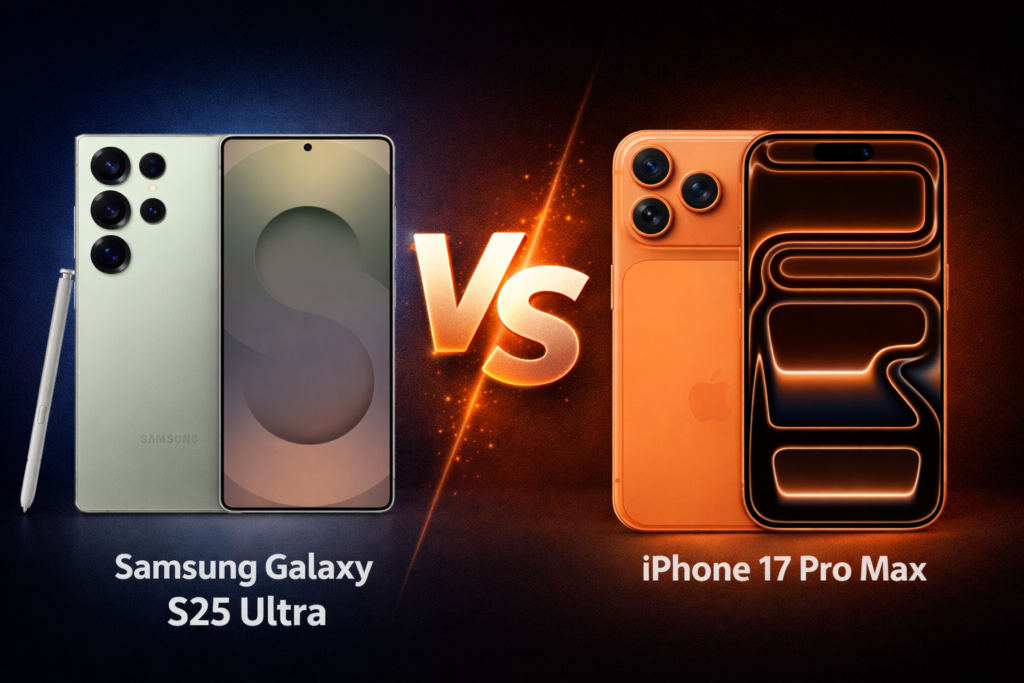
Apple has refined the design of the iPhone 17 Pro Max with slimmer bezels and a new titanium finish that feels more durable and resistant to fingerprints than previous models. The device weighs around 221 grams, maintaining the solid and premium feel Apple users expect. The camera module remains large but now blends more seamlessly into the device’s body.
On the other hand, the Samsung Galaxy S25 Ultra continues Samsung’s bold squared design language. It weighs slightly more at 233 grams but compensates with improved durability thanks to Gorilla Glass Armor on both the front and back. One of the S25 Ultra’s biggest advantages remains the integrated S Pen, which adds productivity features that the iPhone simply doesn’t offer.
Overall, both phones feel extremely premium. The iPhone emphasizes refined design and comfort, while the Samsung offers extra functionality through the S Pen.
Display Technology
The iPhone 17 Pro Max features a stunning 6.9-inch Super Retina XDR display with Apple’s ProMotion technology, supporting a refresh rate from 1Hz to 120Hz. Apple has also improved peak brightness, making outdoor visibility significantly better. Colors are extremely accurate, and HDR content looks excellent.
Samsung counters with a 6.8-inch Dynamic AMOLED 2X display on the Galaxy S25 Ultra. Samsung’s display reaches even higher peak brightness levels, which makes it easier to use under direct sunlight. Additionally, the phone includes an anti-reflective coating, reducing glare and improving visibility outdoors.
While Samsung slightly leads in brightness and outdoor performance, Apple’s display continues to offer industry-leading color accuracy and smooth performance.
Performance and Hardware
The iPhone 17 Pro Max is powered by Apple’s latest A19 Pro chip, which delivers outstanding performance. Apps launch instantly, multitasking is smooth, and demanding tasks like 4K video editing or high-end gaming run effortlessly.
Meanwhile, the Samsung Galaxy S25 Ultra is equipped with Qualcomm’s Snapdragon 8 Gen 4 processor, paired with 12GB of RAM. Samsung’s additional RAM allows the phone to keep more apps running in the background, which benefits heavy multitaskers.
In real-world usage, both devices feel incredibly fast. However, the iPhone tends to maintain slightly more consistent performance during long gaming sessions, while the Samsung offers greater flexibility for multitasking and productivity.
Camera Systems
The iPhone 17 Pro Max includes a powerful triple-camera system:
- 48MP main camera
- 48MP ultrawide camera
- 5x telephoto lens
Apple’s computational photography produces natural-looking photos with balanced colors and excellent dynamic range. Video recording remains one of the iPhone’s strongest advantages, offering exceptional stabilization and reliable autofocus.
The Samsung Galaxy S25 Ultra pushes camera hardware even further with:
- 200MP main sensor
- 50MP ultrawide lens
- 10MP 3x telephoto lens
- 50MP periscope zoom camera
Samsung’s setup delivers incredible detail and significantly stronger zoom capabilities. For long-distance photography, the S25 Ultra clearly outperforms the iPhone.
In summary:
- Photography detail and zoom → Samsung wins
- Video recording and stabilization → iPhone leads
Battery Life and Charging
Apple does not officially reveal battery capacity, but the iPhone 17 Pro Max easily lasts a full day of moderate to heavy use. Charging speeds reach around 30W wired and 25W MagSafe wireless charging.
The Samsung Galaxy S25 Ultra includes a 5,000mAh battery and supports 45W wired fast charging along with 15W wireless charging.
Both phones comfortably last a full day, but Samsung’s faster charging gives it a slight advantage when you need to quickly top up the battery.
Software Experience
The iPhone 17 Pro Max runs iOS, known for its smooth performance, long software support, and seamless integration with other Apple devices such as Macs, iPads, and Apple Watches.
The Samsung Galaxy S25 Ultra runs One UI 7 based on Android 15, offering far more customization options. Features like split-screen multitasking, S Pen support, and Samsung DeX desktop mode provide a more flexible productivity experience.
Choosing between them often comes down to ecosystem preference:
- Apple’s polished and simple interface
- Android’s flexibility and customization
Price and Value
The iPhone 17 Pro Max starts at:
- $1,199 for 256GB
- Up to $1,599 for 1TB
The Samsung Galaxy S25 Ultra starts at:
- $1,299 for 256GB
- Up to $1,619 for 1TB
Samsung’s base model costs slightly more but includes 12GB RAM and the S Pen, which may add value for certain users.
Final Verdict
The iPhone 17 Pro Max vs Samsung Galaxy S25 Ultra comparison doesn’t produce a clear universal winner. Instead, the best choice depends on what you value most in a smartphone.
Choose the iPhone 17 Pro Max if you prefer:
- Apple ecosystem integration
- Natural photo processing
- Best-in-class video recording
- A clean and polished iOS experience
Choose the Samsung Galaxy S25 Ultra if you want:
- The productivity of the S Pen
- More customization and flexibility
- Better zoom photography
- Faster charging and powerful hardware
Both smartphones represent the peak of flagship mobile technology. Whether you choose Apple or Samsung, you’ll be getting one of the most advanced smartphones available today.